

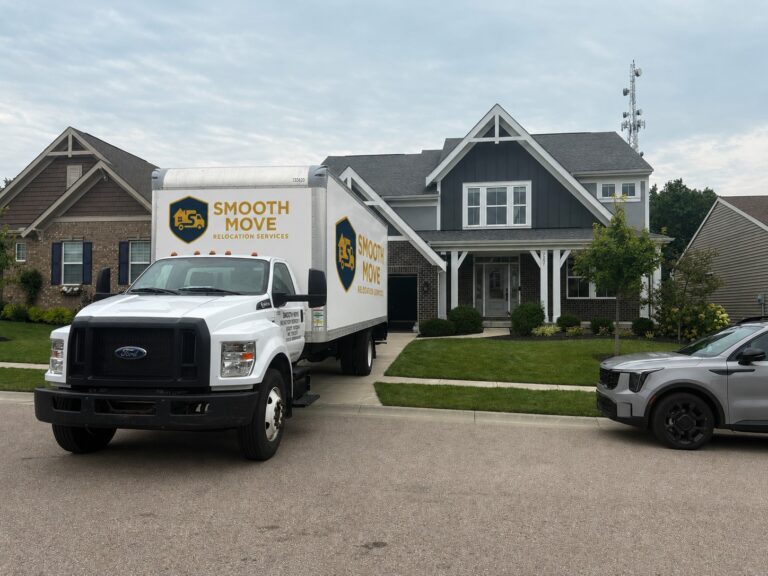

25 Years of Moving Cincinnati: How to Prepare for Your Move Day the Right Way
After 25 years of loading trucks, protecting hardwood floors, and getting families into their new homes across Greater Cincinnati, I’ve learned one thing: the smoothest moves are the ones that are prepared for before we ever pull into the driveway. Here’s exactly how to get ready — and the honest answers to the questions customers ask me most.
A move goes one of two ways. Either everything is boxed, labeled, and ready when my crew arrives — and we’re loaded and rolling in no time — or we spend the first hour hunting for tape and packing loose lamps that should have been in a box the night before. This guide is built from real jobs, not a brochure. Follow it and your move day will be faster, safer, and cheaper.
Start by Choosing the Right Moving Company
Before you talk packing or scheduling, choose your mover carefully — it’s the single biggest factor in how your day goes. The moving industry is full of brokers who take your deposit and hand your job off to whoever they can find. You want to know exactly who’s showing up. Ask these questions before you book anyone:
- Are you a moving company or a moving broker? A broker doesn’t own trucks or employ crews — they sell your job to a third party you’ve never spoken to. Book the company that actually does the work.
- Are all your movers payroll (W-2) employees, or do you use subcontractors and day labor? Payroll crews are trained, accountable, and covered under the company’s insurance. Subcontractors and day laborers are a gamble on who walks through your door.
- Are you licensed, and can I verify it? A legitimate mover will hand you their USDOT, MC, and state numbers without hesitation so you can look them up yourself.
For the record, at Smooth Move every mover is a W-2 payroll employee — no brokers, no subcontractors, no day laborers — and our license numbers are at the bottom of this page for you to verify.
Don’t just take a mover’s word for it — you can check any company yourself through the government. Use the FMCSA registered mover search to confirm a company is federally registered and see whether they’re a carrier or a broker, and check the PUCO list of registered Ohio movers to confirm they’re licensed in Ohio. If a company can’t be found on either, that’s a serious red flag.
Schedule Your Move 4 to 6 Weeks Out
Once you have an approximate move date, get on a mover’s calendar four to six weeks ahead. Good crews book up, especially at month-end and during the busy season, and the earlier you schedule the better your pick of dates and times. Booking early also gives you breathing room to pack properly instead of scrambling the night before — and, as you’ll see below, time to handle parking and access details that Cincinnati neighborhoods often require.
Simple Ways to Save Money on Your Move
On an hourly move, the clock is the cost. Anything you can do to cut the time we spend on-site puts money back in your pocket — and some of the biggest time savers are things you can knock out yourself in the days before we arrive. None of this is required, and we’re glad to handle all of it. But if you want to keep the bill down, here’s where the real time goes:
- Break down furniture and put it back together yourself. Bed frames, tables, and modular pieces take real time to disassemble and reassemble. If you take them apart before we arrive and rebuild them after, you’re not paying for that labor on the clock.
- Same goes for exercise equipment and game tables. Treadmills, weight racks, and machines are some of the most time-consuming things we handle — and so are foosball tables, air hockey tables, and poker tables. Disassembling and reassembling them yourself can save a substantial amount of time. Not required, but it’s time off the clock.
- And storage shelves. Metal and wire shelving units are slow to take apart and rebuild. Breaking them down ahead of time and setting them back up yourself keeps that time off your invoice.
- Remove shelves from cabinets and hutches. For furniture with shelves — glass or wood — take the shelves out and remove the little pegs or tabs that hold them, then pack the shelves separately beforehand. Loose shelves rattle and crack in transit, and pulling them on the spot eats time. Doing it ahead protects the glass and keeps the clock down. Not required, but it saves time.
- Consolidate your boxes into one room or the garage. When your packed boxes are gathered in a single spot near the door — on both the load-up and unload ends — instead of scattered across every room and floor, we load and unload dramatically faster. This one is easy and it saves a substantial amount of time.
- Label your furniture and map out the new place. Use masking tape to mark furniture and boxes with the room they go to, and at the unload location either label the doors or hand us a simple diagram of where things go. When we’re unloading and don’t know where a piece belongs, we either have to stop and wait for you or put it in the wrong room — and then it has to be reshuffled, which takes even more time. A few minutes of labeling up front saves a lot of it on the back end.
To be clear: taking furniture apart and putting it back together isn’t required, and neither is consolidating your boxes — we’ll do every bit of it for you. But if saving money matters to you, these are the moves that make the biggest dent.
Packing: The Part That Makes or Breaks Your Move
Ninety percent of a smooth move comes down to how well things are packed before we arrive. Movers move fast when belongings are contained. We slow way down — and your clock runs longer — when we’re working around loose, unpacked items. For a full breakdown of how to pack room by room, see our packing services and tips page.
Everything goes in a box or a bin with a lid
All your smaller items, electronics, dishes, fragile pieces, lamps, and lampshades need to be packed in a box or a sealed plastic bin. If it fits in a box, it shouldn’t be sitting loose. Loose items don’t stack, don’t travel safely, and turn a two-hour load into a four-hour one.
Keep boxes under 50 pounds
A manageable box is a safe box. Keep each one at roughly 50 pounds or less. It protects your belongings from crushing under their own weight and it protects everyone’s backs. A good rule: books and heavy items go in small boxes, light bulky items like bedding go in big ones.
Use standard-size moving boxes
Whenever you can, use standard moving boxes in consistent sizes. Uniform boxes stack square and tight, which means a more stable load, less shifting on the road, and more of your belongings fitting on the truck. When you mix in odd, mismatched boxes, the load won’t pack as tightly and it’s more likely to shift. It’s also worth buying sturdy boxes rather than relying on free used ones — used boxes have already been through a move or two, and they tear and collapse far more easily when it matters most.
Empty your drawers and cabinets
Dressers, desks, and cabinets should be emptied of loose contents unless we’ve cleared it with you in advance. Full drawers make furniture dangerously heavy and unbalanced on stairs, and things shift and break in transit.
TVs need a TV box
If we’re transporting your television, it has to be in a proper TV box — not wrapped in a blanket. A blanket doesn’t protect a screen from pressure. If you no longer have the original carton, TV boxes are inexpensive and available at most home improvement stores.
What You Need When Loading a Truck or Pod
Whether we’re loading our truck or you’re filling a pod or rental, a load is only as good as the materials protecting it. If you’re renting or loading a container yourself, here’s what to have on hand — and what to ask any mover about before you book:
- Stretch wrap for furniture. Ask your moving company whether they offer stretch wrapping — some charge extra for it. We stretch-wrap furniture for free. It keeps drawers and doors closed, holds upholstery clean, and protects finishes in transit.
- Moving pads on load day. Even stretch-wrapped furniture needs proper padding. Stretch wrap holds a piece together but it won’t stop a hard corner from denting the piece next to it. Have moving pads (furniture blankets) ready the day of load-up so everything is cushioned, not just wrapped.
- Proper tie-backs for your load. A load needs to be secured so it doesn’t shift on the road. That can be as simple as rope or ratchet straps used at each tier to tie the load back against the walls of the truck or pod. An unsecured load is how things topple and break in transit.
Sizing Your Storage Unit or Truck: Go Bigger
When you’re renting a storage unit or picking a truck size for load-up, always err on the side of more space than you think you need. People almost always underestimate how much they own once it’s boxed and packed. Coming up short is a real problem: you end up cramming things in too tight, leaving items behind, or making a second trip — and with storage, running out of room can mean stacking things unsafely or renting a second unit at a worse rate. A little extra space costs a little more up front, but it lets you load safely, keep aisles clear in a storage unit, and get everything in one trip. Having more space is always better than not having enough.
The Appliance Rule Every Customer Should Know
We do not disconnect or reconnect any appliance that uses water or gas. That includes washing machines, refrigerators with water lines, gas dryers, gas stoves, dishwashers, and ice makers.
This isn’t us being difficult — it’s insurance restrictions and liability regulations. Our movers aren’t permitted to handle plumbing or gas connections. Those appliances need to be disconnected by you or a licensed professional before move day. We can’t be responsible for leaks, flooding, gas issues, or damage from an improper connection, so please have this handled ahead of time.
Protecting Your Floors
We bring professional floor runners and lay them down in the main traffic lanes of your home. But runners can’t cover every square foot of every room, and in wet or winter weather I strongly recommend adding your own protection in the areas that matter to you.
Simple options that work:
- Carpet remnants or rugs you already own
- Flattened cardboard sheets across high-traffic paths
- A painter’s tarp or plastic sheeting
- Extra mats or towels right at the entry points
Anything beyond our standard runners is the customer’s to provide, and we’re not liable for moisture, scratches, or flooring damage in areas that weren’t protected. A little prep here saves a lot of heartache on brand-new floors.
Winter and Bad-Weather Moves in Cincinnati
Cincinnati winters are real, and a snowy move day is a safety situation for everyone. Here’s what has to happen before we arrive when the weather turns:
- Clear and treat your surfaces. Driveways, sidewalks, steps, porches, and walkways must be shoveled and salted at least 20–30 minutes before we arrive.
- Give the truck safe access. Make sure our truck can reach your home by driveway or legal street parking. Blocked or unsafe access can cause delays or a reschedule.
- Clear the outdoor items. Knock snow and ice off patio furniture, grills, and benches so we’re not tracking water and ice into the truck and your home.
- Expect a safety-first pace. If snow or ice keeps coming, we may pause until surfaces are safe. Winter moving is slower by necessity and can add to total move time.
A Word on New Driveways
If you’re moving into new construction or a home with a freshly poured driveway, know this ahead of time: builders often don’t want a loaded moving truck on a new driveway. Fresh concrete and asphalt can take weeks to fully cure, and the weight of a loaded box truck can crack or leave impressions in a surface that looks solid but isn’t. Check with your builder about their curing timeline before move day. If the driveway is off-limits, let us know in advance so we can plan for a longer carry from legal street parking — that’s easy to work around when we know about it early, and a scramble if we find out when we pull up.
Moving in Cincinnati’s Tight Neighborhoods
A lot of Cincinnati’s best neighborhoods come with narrow, crowded streets — think Clifton, Hyde Park, and the older parts of town with one-way streets and no driveways. A 26-foot truck needs room to park close to your door, and in these neighborhoods that space isn’t guaranteed. A little planning here makes an enormous difference to how fast your move goes:
- Reserve your parking spot. For tight or one-way streets, contact the City of Cincinnati about temporary “No Parking” signs so neighbors don’t fill the spot you’ll need for the truck on move day. This is one of the most overlooked steps and one of the most valuable.
- Give your neighbors a heads-up. Let the folks next door know you’re moving and roughly when. Most people are happy to keep a spot clear if they know it’s coming.
- Schedule on a weekday. When neighbors are at work, the street is emptier and parking is far easier to secure. A Tuesday move in Hyde Park is a very different experience than a Saturday one.
- Tell us about the access. Narrow streets, one-ways, stairs, or a long walk from where we can park — the more we know when you book, the better we plan the crew and the truck position.
Items We Legally and Safely Cannot Move
There are things no reputable, licensed mover will put on a truck. Please plan to transport these yourself:
Flammable and hazardous materials
- Gasoline, propane tanks, and fuel sources — including fuel left in lawn mowers, snow blowers, and generators
- Paints, thinners, varnishes, and solvents
- Chemicals, pesticides, and fertilizers
- Fireworks, explosives, and ammunition
Firearms
We don’t move guns or firearms of any kind — pistols, rifles, or shotguns. Between insurance restrictions, federal transport laws, and company liability, firearms must be transported by the legal owner.
Perishables and living things
- Live plants, indoor or outdoor
- Perishable or opened food
High-value and personal items
For your own security, keep these with you: cash, jewelry, important documents, medications, and prescriptions. These should never ride in the truck.
Prepping Grills, Garbage Cans, and Yard Gear
Outdoor items are some of the messiest and most overlooked things on move day. A little prep keeps grease, ash, and grime off the rest of your belongings and the truck:
- Gas grills: Remove the propane tank entirely — we can’t transport it (it goes with the flammables list above). The grill itself can travel once the tank is off.
- Charcoal grills: Remove the grease pan and make sure the grill is completely empty of ash and charcoal. Leftover ash and grease will spill and smear onto everything around it in transit.
- Garbage cans: If you’re moving a garbage can, spray it out and clean it thoroughly first so it’s not fouling the truck. A clean can also doubles as a great way to consolidate rakes, shovels, brooms, and other long-handled yard tools — stand them up inside and you’ve turned a pile of awkward items into one easy thing to carry.
Getting the House Ready the Morning of the Move
A couple of things the morning of make a real difference in how fast and safely the day goes — and they’re easy to line up in advance.
Arrange for kids and pets
Have a plan for children and pets before we arrive. A babysitter, a pet sitter, or dropping them at a family member’s place for the day is ideal. Kids and pets running loose during a move create genuine safety hazards — we’re carrying heavy furniture through doorways and down stairs — and they slow us down. If we have to stop to get a dog out of the room we’re working in, or shuffle a child from room to room as we clear the house, that’s time added to your move. Getting them settled somewhere safe protects everyone and keeps the day moving.
Clear the driveway and garage of vehicles
Have your cars out of the driveway and garage before we get there — ideally 15 to 20 minutes before our estimated arrival time. Doing it ahead means we’re not standing around waiting for you to move vehicles so we can back the truck in and start loading. One tip when you pull your car out: don’t park it right beside the driveway. Give the truck room to back in cleanly, because a car parked tight to the driveway entrance can make it hard for us to get positioned.
Parking, Access, and Building Rules
If you’re moving into or out of an apartment, condo, or office building, you’re responsible for arranging parking permits, HOA permissions, and elevator reservations ahead of time. Extra time from restricted access, long carries, or waiting on an elevator becomes part of the move — so locking this down early keeps your bill down. One planning tip from experience: in tight streets, buildings with elevators, or HOA neighborhoods, a weekday move is often smoother and easier to schedule around than a busy weekend.
Your Final Move-Day Checklist
- All items are packed, labeled, and sealed in boxes or containers
- Water and gas appliances are disconnected by you or a qualified professional
- Walkways, steps, and driveways are clear, salted, and safe
- Patio furniture, grills, and outdoor items are free of snow and ice
- Indoor pathways are clear of clutter and trip hazards, and children and pets are settled safely away for the day
- Cars are out of the driveway and garage 15–20 minutes before arrival, parked clear of the driveway so the truck can back in
- A “first-night” box is set aside to travel with you — toiletries, medications, chargers, basic tools, and a change of clothes
Working With Smooth Move Relocation Services
Here’s how we operate, so you know exactly what to expect when you hire us.
Licensed, insured, and verifiable
We’re a fully licensed and insured Cincinnati moving company operating under USDOT #1878284, MC #781353, and Ohio PUCO #00604903 — all publicly verifiable through the FMCSA and PUCO. Every mover on our crew is a W-2 payroll employee. We don’t use brokers, subcontractors, or day laborers, so the people who show up are our own trained, insured team.
Free in-home estimates
We provide free in-home estimates — an actual walkthrough of your home, not a virtual call or a form-based guess off an inventory list. This is the most accurate way to quote a move, and it protects you from the surprise charges that come with sight-unseen estimates.
Long-distance moves, handled entirely by our own crew
This is one of the biggest differences between Smooth Move and a lot of the companies you’ll compare us to. On a long-distance move, Smooth Move uses only Smooth Move employees. My people load the truck, my people drive the truck, and my people unload the truck. There are no moving brokers involved and no hand-offs to a third party you’ve never met.
Just as important: your furniture is the only furniture on our truck. We do not combine loads. That means there’s no chance of your belongings getting mixed in with another family’s shipment, which is exactly how items get misplaced, lost, or delivered to the wrong address.
When several parties are involved — brokers, multiple carriers, combined loads — too many hands touch your belongings, and things get misplaced, especially when loads are combined and shuffled at transfer points. Smooth Move strongly recommends against that model. Keeping one crew and one load from your door to your destination simply eliminates a whole category of problems before they can happen. Learn more about how we handle long-distance moving.
Hourly and flat-rate pricing
We offer both hourly and flat-rate pricing depending on what fits your move best. Local moves are often billed hourly, while full-pack and long-distance moves are frequently quoted as a flat rate. We’ll walk you through which structure makes the most sense for your situation during your in-home estimate.
Payment terms
Payment is due upon completion of the move. We accept cash and check for local moves; long-distance moves are paid by bank cashier’s check. Card payments are welcome and carry a 5% processing fee. We’ll go over all of this up front so there are no surprises on move day.
A final walk-through, every time
We don’t consider a move done until we’ve walked it with you. At your old home, we do a final walk-through to make sure everything is out of the house — nothing left in a closet, basement, or garage. At your new place, we walk through again to confirm everything is where you want it before we leave. That way we both know we got everything and everything is in place when we pull away.
Frequently Asked Questions
Is Smooth Move Relocation Services licensed and insured?
Yes. Smooth Move Relocation Services is fully licensed and insured, operating under USDOT #1878284, MC #781353, and Ohio PUCO #00604903 — all publicly verifiable through the FMCSA and PUCO. Every mover is a W-2 payroll employee, and we never use brokers, subcontractors, or day laborers.
What size storage unit or truck should I get?
When in doubt, size up. People almost always underestimate how much they own once it’s boxed and packed. Coming up short means cramming things too tight, leaving items behind, making a second trip, or renting a second storage unit at a worse rate. A little extra space lets you load safely, keep storage aisles clear, and get everything in one trip — having more space is always better than not having enough.
What do I need to load a truck or pod properly?
Three things protect a load: stretch wrap, moving pads, and tie-backs. Ask your mover if they offer stretch wrapping — Smooth Move Relocation Services provides it free. Even wrapped furniture needs proper moving pads on load day so hard corners don’t dent nearby pieces. And secure the load with tie-backs — rope or ratchet straps at each tier — so nothing shifts or topples on the road.
Do you charge extra to stretch-wrap furniture?
No. Smooth Move Relocation Services stretch-wraps furniture for free. It keeps drawers and doors closed and protects upholstery and finishes in transit. Many companies charge for this, so it’s always worth asking — with us it’s included.
Who handles my long-distance move — your crew or a third party?
Only our crew. On a long-distance move, Smooth Move Relocation Services uses only Smooth Move employees — my people load the truck, drive the truck, and unload the truck. There are no moving brokers and no hand-offs to a third party you’ve never met. The team that picks up your belongings is the same team that delivers them.
Will my belongings be combined with someone else’s shipment?
Never. Your furniture is the only furniture on our truck — Smooth Move Relocation Services does not combine loads. Combining shipments is exactly how items get mixed up, misplaced, or delivered to the wrong address, because too many hands touch your belongings at transfer points. Keeping one crew and one load from your door to your destination eliminates that risk entirely.
Do you offer free estimates?
Yes. Smooth Move Relocation Services provides free in-home estimates — a real walkthrough of your home rather than a virtual call or a guess off an inventory list. It’s the most accurate way to quote your move and protects you from surprise charges.
Why do you do an in-home estimate instead of a virtual one?
Because an in-home estimate is far more accurate. When we walk your home in person, we see exactly what’s being moved — the oversized furniture, the tight staircase, the long carry to the truck, the items that need special handling — things a virtual call or an inventory list almost always misses. A sight-unseen estimate leads to surprise charges when reality doesn’t match the guess. Seeing your home in person lets us give you an honest, accurate quote and plan the right crew and truck, so there are no surprises on move day.
Do you charge hourly or a flat rate?
Both — Smooth Move Relocation Services offers hourly and flat-rate pricing depending on your move. Local moves are often billed hourly, while full-pack and long-distance moves are frequently quoted as a flat rate. We’ll recommend the structure that fits your move best during your free in-home estimate.
How and when do I pay for my move?
Payment is due upon completion of the move. Smooth Move Relocation Services accepts cash and check for local moves, and bank cashier’s check for long-distance moves. Card payments are welcome with a 5% processing fee. We go over all payment terms up front so there are no surprises.
Does it matter what kind of boxes I use?
It does. Use standard moving boxes in consistent sizes — uniform boxes stack square and tight, so the load is more stable, shifts less on the road, and fits more on the truck. Mismatched boxes don’t pack as tightly and are more likely to shift. And buy sturdy boxes rather than relying on free used ones; used boxes have already been through a move and tear or collapse far more easily.
How should I label my furniture and boxes for the move?
Use masking tape to mark each piece of furniture and every box with the room it belongs in, and at the new place either label the doors or give us a quick diagram of where things go. If we’re unloading and don’t know where something belongs, we have to stop and wait for you or guess — and anything that lands in the wrong room has to be moved again, which adds time. A few minutes of labeling up front saves a lot on the unload.
Do you do a final walk-through?
Yes. Smooth Move Relocation Services does a final walk-through every time. At your old home we confirm everything is out — nothing left in a closet, basement, or garage. At your new place we walk through again to make sure everything is where you want it before we leave, so we both know we got everything and everything is in place.
What should I do with my kids and pets on moving day?
Arrange for them to be somewhere safe for the day — a babysitter, a pet sitter, or a family member’s place. Kids and pets moving around during a move are a safety hazard with heavy furniture coming through doorways and down stairs, and they slow things down when we have to stop to move a dog out of the room we’re working in or shuffle a child from room to room. Getting them settled elsewhere keeps everyone safe and the move on schedule.
Should I move my cars before the movers arrive?
Yes — have your vehicles out of the driveway and garage about 15 to 20 minutes before our estimated arrival, so we’re not waiting to back the truck in. When you pull your car out, don’t park it right next to the driveway; leave the truck room to back in cleanly, since a car tight to the driveway entrance makes it hard for us to get positioned.
Should I remove the shelves from my cabinets and hutches?
It helps. For furniture with shelves — glass or wood — take the shelves out, remove the little pegs or tabs that hold them, and pack the shelves separately before we arrive. Loose shelves rattle and can crack in transit, and pulling them on the spot adds time. It’s not required — we’ll handle it — but doing it ahead protects the glass and saves time on the clock.
What can I do to save money on my move?
On an hourly move, cutting our on-site time cuts your cost. The biggest savers you can handle yourself: disassemble and reassemble your own furniture, exercise equipment, game tables (foosball, air hockey, poker), and storage shelves — those are the most time-consuming items we deal with. And consolidate your packed boxes into one room or the garage near the door on both ends, rather than scattered across the house, so we load and unload much faster. None of this is required — we’ll gladly do it all — but doing it yourself saves a substantial amount of time.
How far in advance should I book my move?
Aim for four to six weeks ahead of your approximate move date. Good crews book up fast, especially at month-end and in the busy season, so booking early gives you the best choice of dates and time to pack without scrambling.
How do I make sure I’m hiring a real moving company and not a broker?
Ask directly: “Are you a moving company or a broker?” and “Are all your movers W-2 payroll employees, or do you use subcontractors and day labor?” A broker sells your job to a third party you’ve never spoken to. We’re a direct moving company with W-2 payroll crews only — no brokers, no subcontractors, no day laborers — and we’ll give you our license numbers to verify.
Can the moving truck park on my new driveway?
Often not right away. Builders frequently don’t want a loaded truck on a freshly poured driveway, because new concrete and asphalt can crack or dent under the weight before it’s fully cured. Check your builder’s curing timeline, and if the driveway is off-limits, tell us in advance so we can plan for street parking and a longer carry.
How do I handle parking on a tight or one-way street in Cincinnati?
In neighborhoods like Clifton or Hyde Park, contact the City of Cincinnati about temporary “No Parking” signs to hold the spot for the truck, give your neighbors a heads-up, and schedule on a weekday when the street is emptier. Let us know about narrow streets, one-ways, or long carries when you book so we can position the truck and crew accordingly.
How do I prep my grill and garbage cans for the move?
For a gas grill, remove the propane tank completely — we can’t transport propane. For a charcoal grill, take out the grease pan and empty it fully of ash and charcoal so nothing spills in transit. If you’re moving a garbage can, spray it out and clean it first, then use it to consolidate rakes, shovels, and brooms — standing them upright inside makes your yard tools much easier to carry.
Do I have to pack everything myself, or can the movers pack for me?
For a standard move, we ask that your smaller items be boxed or in lidded bins before we arrive — it keeps your move fast and your cost down. We also offer full-pack services if you’d rather we handle the packing. Just let us know when you book so we can plan the right crew and time.
Will you move my washer, dryer, or refrigerator?
Yes, we move them — but we don’t disconnect or reconnect anything that uses water or gas. Washing machines, refrigerators with water lines, gas dryers, gas stoves, dishwashers, and ice makers need to be disconnected by you or a licensed professional before move day. Once they’re disconnected and ready, we’ll load and transport them.
Can you move my TV without the original box?
We can, but it needs to be in a TV box — a blanket alone doesn’t protect a flat screen from pressure damage. If you don’t have the original carton, TV boxes are inexpensive at most home improvement stores. Have one ready and we’ll pack it safely.
What won’t you move?
We can’t transport flammable or hazardous materials (gasoline, propane, paints, chemicals, ammunition), firearms of any kind, live plants, perishable food, or high-value personal items like cash, jewelry, documents, and medications. Those last ones we recommend you carry yourself for security. Everything else, we’ve got.
Do you protect my floors?
Yes. We lay professional floor runners in the main traffic lanes. Because runners can’t cover every surface, we recommend adding your own protection — rugs, cardboard, or a tarp — in areas you’re especially concerned about, particularly in wet or winter weather.
What happens if it snows on my move day?
We still move — safely. We ask that driveways, sidewalks, steps, and walkways be shoveled and salted 20–30 minutes before we arrive, and that the truck has safe access. If snow or ice keeps falling, we may pause until surfaces are safe. Winter moves go at a careful pace and can take a bit longer, but keeping everyone safe is the priority.
Do I need to reserve parking or an elevator?
If you’re at an apartment, condo, or office building, yes — you’re responsible for parking permits, HOA approvals, and elevator reservations. Handling this ahead of time keeps your move efficient, since extra time spent waiting on access is billed as part of the move.
How do I know Smooth Move is properly licensed?
You can verify us directly. We operate under USDOT #1878284, MC #781353, and Ohio PUCO #00604903 — all publicly checkable through the FMCSA and PUCO. We use W-2 employees only, no brokers, subcontractors, or day laborers, so the crew that shows up is our crew.
Ready for a Smooth Move?
Get a free in-home estimate from a licensed, local Cincinnati mover with 25 years of experience.
Cincinnati: 513-481-1316
Mason, OH: 513-204-3600
Prefer not to call? Send us your details and we’ll reach out:
Smooth Move Relocation Services LLC
Serving Cincinnati, Mason, and Northern Kentucky
USDOT #1878284 | MC #781353 | Ohio PUCO #00604903
Licensed, insured, and verifiable — W-2 crews only, no brokers or subcontractors.
