

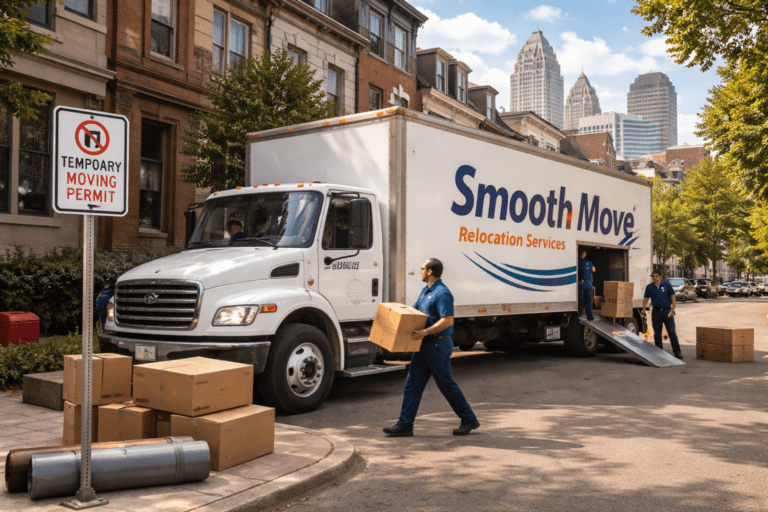
Moving in Cincinnati isn’t just about packing boxes and loading trucks. One overlooked detail can delay an entire move: street parking regulations. Whether you’re relocating to Over-the-Rhine, Hyde Park, Clifton, or a quiet residential street on the west side, understanding local parking rules can prevent citations, towing issues, or unexpected delays.
If you’re planning a move in the Queen City, here’s what you need to know before moving day arrives.
Why Street Parking Matters More Than You Think
In many Cincinnati neighborhoods, especially urban areas near downtown, street access is limited. Large moving trucks require sufficient curb space, and not all streets allow unrestricted parking.
A moving truck that blocks traffic, sits in a restricted zone, or exceeds posted time limits can be ticketed quickly. In high-density areas, enforcement is active and consistent.
Planning ahead eliminates stress and protects your timeline.
Common Cincinnati Parking Restrictions That Impact Moves
1. Residential Permit Parking Zones
Neighborhoods such as Mount Adams and parts of Clifton operate under residential permit systems. If you’re moving into one of these areas, you may not be able to park freely without a temporary permit.
Failing to secure one in advance can result in citations—even if the truck is only there for a few hours.
2. Metered Parking & Time Limits
Downtown Cincinnati, Over-the-Rhine, and business corridors often enforce metered parking and short-term limits. Moving trucks exceeding those limits may receive fines.
Even if meters aren’t enforced on Sundays or holidays, special events can override normal rules.
3. No Parking & Loading Zone Restrictions
Certain streets restrict commercial vehicle parking during peak traffic hours. Others designate commercial loading zones that may not accommodate full-size 26-foot moving trucks.
Blocking bus routes or fire hydrants—even partially—can result in immediate action.
4. Narrow Streets & Hills
Cincinnati’s historic neighborhoods are known for tight streets and steep grades. Parking a large truck improperly can create safety hazards or obstruct emergency vehicles.
Experienced local movers account for this during planning, but it’s something DIY movers often overlook.
When You May Need a Temporary No-Parking Permit
In some cases, you can request temporary signage or curb access for your moving day. This is especially helpful in dense areas where parking is competitive.
Securing reserved curb space ensures:
- Faster loading and unloading
- Reduced risk of tickets
- No last-minute scrambling
Planning this 1–2 weeks ahead of your move is ideal.
HOA & Private Street Considerations
If you’re moving into a subdivision in neighborhoods like Anderson Township or certain West Side communities, you may also need approval from a homeowners association.
Private streets can have additional restrictions beyond city ordinances.
How Smooth Move Relocation Services Helps You Avoid Parking Problems
At Smooth Move Relocation Services, we don’t just show up with a truck—we plan strategically.
Our team evaluates:
- Street width and grade
- Local signage and posted limits
- Traffic flow patterns
- Neighborhood permit requirements
This preparation reduces downtime and protects your move from avoidable complications.
If you’re planning a residential relocation, you may also want to review:
 How Much Does It Cost to Move a 3 Bedroom House?
For commercial clients, parking logistics can be even more complex:
How to Plan a Smooth Office Move
And if you’re still early in the planning phase:
Moving in 2026: Expert Tips for a Stress-Free Residential and Office Relocation
Plan the Curb Before You Pack the Boxes
Cincinnati’s charm comes with unique infrastructure challenges. Historic streets, event traffic, and neighborhood-specific rules can all influence your moving day experience.
The key is preparation.
If you’re relocating anywhere in the Greater Cincinnati area—including Mason, West Chester, Northern Kentucky, or surrounding communities—understanding parking rules ahead of time can save hours of frustration.
Professional movers who know the city make all the difference.
